

COMPRESSION: The Machines That Move Natural Gas Inside NorthAmerica's 24/7 Compression Industry (Part 1)

Part 1 of an Eight-Part Technical Series
From the Gas Well to the Pipeline: Understanding Midstream Natural Gas, Industrial Compression Packages, and the Extraordinary Operating Life of These Machines
By William Gillette (LogiLube, LLC)
The Invisible Machines Behind North America's Natural Gas Supply
Imagine a winter morning at a natural gas compression station in western Canada. The temperature is well below freezing. Snow covers the surrounding mountains, and the first light of dawn illuminates a series of enormous industrial machines.
Four natural gas-fueled engines, each connected to a large reciprocating compressor, operate continuously. Massive cooling fans circulate air through industrial radiators. A service technician arrives in a maintenance truck to inspect one of the machines.
These engines may have been running for weeks or months between planned service intervals. Over their working lives, they can accumulate hundreds of thousands of operating hours through successive maintenance and overhaul cycles.
Yet few people outside the energy industry know these machines exist.
When we think about natural gas, we typically picture drilling rigs, pipelines, home heating, power plants, or liquefied natural gas terminals. Rarely do we think about the equipment that makes moving this essential energy resource possible.
That equipment is the natural gas compression packages which have been running continuously.
Throughout North America, thousands of these industrial systems help move natural gas from producing fields through gathering systems, processing facilities, and long-distance pipelines.
They are among the hardest-working machines in modern energy infrastructure.
Understanding how they operate and the extraordinary demands placed upon them is the starting point for understanding an increasingly important opportunity in industrial equipment reliability.
What Exactly Is Midstream Natural Gas?
The natural gas industry is commonly divided into three sectors: upstream, midstream, and downstream.
Upstream is where natural gas begins its journey. Energy companies explore underground geological formations, drill wells, and produce natural gas from reservoirs, including formations containing both natural gas and crude oil.
Midstream is the transportation and processing network connecting production fields with energy markets. It includes gas gathering pipelines, compressor stations, natural gas processing facilities, storage infrastructure, and major transmission pipelines.
Downstream is where natural gas reaches utilities, industrial facilities, power plants, commercial buildings, and residential consumers.
An easy way to understand these relationships is:
Upstream gets the natural gas out of the ground. Midstream moves it where it needs to go. Downstream puts it to work.
The separation is not always absolute. Compression can also support upstream production activities, including gas lift, and some companies operate across several sectors.
Nevertheless, natural gas compression is particularly important to midstream infrastructure.
Raw gas collected from wells can contain water vapor, natural gas liquids, and other constituents that must be managed or removed. Gathering pipelines transport the gas to processing facilities, where it can be conditioned to meet transportation specifications.
Once processed, natural gas enters larger transmission pipelines for delivery to regional markets, utilities, industrial customers, and export facilities.
Throughout this journey, gas pressure must be managed to maintain the required flow.
That is where compression becomes indispensable.

FIGURE 1 — From the Gas Well to the Consumer
Simplified North American natural gas value-chain diagram identifying upstream production, midstream gathering, compression, processing and transmission, and downstream energy use.
Where Are These Machines Located?
The scale of North America's natural gas industry is remarkable.
According to the U.S. Energy Information Administration, U.S. marketed natural gas production reached a record average of 118.5 billion cubic feet per day in 2025, or 29% of global production.
The EIA projected additional growth during 2026, reflecting expanding production and demand for natural gas across electricity generation, industrial markets, and exports.
Natural gas compression activity follows this extensive resource base.
In the United States, major producing regions include the Permian Basin of West Texas and southeastern New Mexico, the Haynesville of Louisiana and East Texas, the Appalachian Marcellus and Utica formations, the Eagle Ford in South Texas, the Bakken in North Dakota, and the Denver-Julesburg (DJ) Basin in Colorado.
Canada is equally important to the North American compression industry.
The Western Canadian Sedimentary Basin, extending across much of Alberta and northeastern British Columbia, contains major natural gas resources. The Montney formation has become a particularly important producing area.[1]
Canada's natural gas production averaged approximately 19 billion cubic feet per day in 2025, according to the Canada Energy Regulator.
The infrastructure connecting these producing regions to consumption centers extends across national borders, through multiple climates and operating environments.
Compression packages may operate in enclosed buildings, open-air industrial stations, isolated production fields, or major transmission facilities.
From the heat and dust of West Texas to winter temperatures in Alberta, these machines must perform reliably under demanding environmental conditions.
An estimated 20,000 natural-gas-fueled reciprocating engines rated above 1,000 hp are driving gas compressors in upstream and midstream service across North America, within a plausible range of 15,000 to 25,000 units. Assuming an average rating of about 1,800 hp per engine, that fleet represents roughly 36 million hp of combined capacity (about 27 to 45 million hp across the range).
The United States accounts for the vast majority, with approximately 18,000 engines totaling an estimated 32 million hp. Canada’s population is far smaller, at approximately 2,000 engines and an estimated 3.6 million hp.[2]

FIGURE 2 — North America's Natural Gas Production Regions
Map identifying major U.S. and Canadian producing basins, representative gathering regions, transmission corridors, and the geographic reach of the natural gas compression industry.
Why Does Natural Gas Need Compression?
Natural gas moves through pipelines because of pressure differences.
As gas travels through a pipeline, friction and other hydraulic effects cause pressure to decrease. Maintaining the necessary flow rate often requires adding energy to the gas by increasing its pressure.
A natural gas compressor performs this function.
In a reciprocating compressor, pistons travel back and forth inside cylinders. Gas enters through suction valves, is compressed by the movement of the piston, and is discharged at a higher pressure.
Multiple cylinders and compression stages may be used to achieve the desired operating conditions.
The basic mechanical principle resembles the piston-and-cylinder arrangement in an automobile engine, but the purpose is different.
An automobile engine converts fuel energy into rotational mechanical power.
A reciprocating gas compressor consumes mechanical power to increase the pressure of natural gas.
At many compression stations, a large industrial natural gas engine supplies this power through a mechanical coupling.
The resulting machine combination is commonly called a natural gas compression package.
Anatomy of a Natural Gas Compression Package
Consider a representative package consisting of a Caterpillar G3608 natural gas engine coupled to an Ariel JGC/4 reciprocating compressor.
These are two distinct pieces of heavy industrial machinery engineered to work together.
The Caterpillar G3608 is an eight-cylinder, four-stroke, turbocharged natural gas engine designed for demanding industrial applications.
The current G3608 A4 has a displacement of approximately 169.6 liters and is rated at up to 2,750 brake horsepower at 1,000 rpm.
For perspective, its engine oil refill capacity is approximately 241 U.S. gallons.
This is not an ordinary engine.
The Ariel JGC/4 is a large, four-throw reciprocating compressor. Its frame is rated for applications up to approximately 4,140 horsepower, although the power used in a particular installation depends on the selected driver, compressor cylinders, gas composition, pressures, and operating conditions.
The CAT engine supplies rotational power to the compressor through a coupling.
The compressor converts that power into gas compression.
Additional equipment completes the package: a large radiator or cooling system, piping, valves, gas-conditioning equipment, lubrication systems, filtration, instrumentation, engine controls, and protective shutdown devices.
The equipment is arranged on engineered structural skids or foundations and integrated by specialized compression package builders.
One important distinction is that the engine and compressor have separate lubrication requirements.
The engine crankcase lubricates components such as bearings, pistons, and the valve train. The compressor frame lubricates its crankshaft, bearings, connecting rods, and crossheads. Compressor cylinders and piston-rod packing may also require a separate force-feed lubrication system.
Consequently, the package contains multiple lubrication environments with different failure mechanisms.
A problem affecting any critical part of the package can interrupt the compression service.
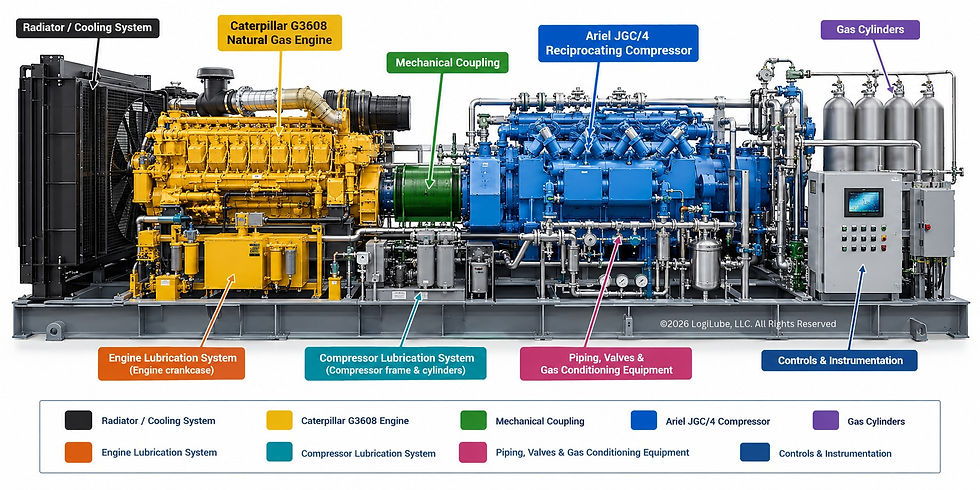
FIGURE 3 — Anatomy of a Natural Gas Compression Package
Technical illustration identifying the black radiator, yellow Caterpillar G3608 engine, mechanical coupling, blue Ariel JGC/4 reciprocating compressor, gas cylinders, lubrication systems, piping, and controls.
Who Makes These Machines?
The North American natural gas compression industry depends on a specialized network of original equipment manufacturers, package builders, authorized dealers, and service providers.
Caterpillar and Waukesha, part of INNIO, are important manufacturers of natural gas engines used to drive compression equipment.
Ariel is a prominent manufacturer of separable reciprocating compressors. Siemens/Dresser-Rand equipment is also represented in the installed compressor population, along with machinery from other established manufacturers.
Specialized package builders combine the engine, compressor, cooling equipment, controls, and associated systems into an application-specific installation.
The final configuration depends on required gas throughput, suction and discharge pressures, available fuel, site conditions, emissions requirements, and operating economics.
Importantly, the CAT G3608/Ariel JGC/4 combination is one representative example of a high-horsepower compression package—not the only configuration used throughout North America.
Two Business Models: Contract Compression and Owned Compression
An important characteristic of the North American natural gas compression market is the distinction between contract-compression services and owner-operated compression.
In the contract-compression model, a specialized company typically owns, installs, operates, and maintains the compression equipment.
The natural gas producer, gathering company, or pipeline operator pays for the required compression service under a commercial agreement.
Companies such as Archrock, Kodiak Gas Services, USA Compression, and Enerflex participate in this market.
The arrangement allows the customer to obtain compression capacity without necessarily purchasing and maintaining the equipment itself.
The contract-compression company assumes substantial responsibility for equipment operation, repairs, preventive maintenance, personnel, and lifecycle costs, subject to its particular agreement.
By contrast, in the owned-compression model, the natural gas producer, processor, pipeline operator, or other energy company owns the compression equipment. Maintenance may be performed internally or outsourced to OEM dealers and independent service organizations.
Both models depend on reliable compression machinery, but their financial incentives can differ.
For the contract-compression company, equipment reliability directly affects the cost of delivering its contracted service and, potentially, the revenue it is allowed to retain.
As an indication of market scale, Archrock reported 5,319 compression units totaling approximately 4.79 million horsepower in its fleet at December 31, 2025. That represents one major provider, not the entire North American market.

FIGURE 5 — Comparison between Contract Compression and Owned Compression Business Models
Contract-compression companies are responsible for equipment reliability that directly affects the cost of delivering its contracted service and, potentially, the revenue it is allowed to retain, referred to as a service-fee-credit.
The Extraordinary Operating Life of a Compression Engine
Perhaps the most surprising characteristic of natural gas compression equipment is its operating duty.
Many installations are intended for continuous operation: 24 hours per day, seven days per week, throughout the year.
A machine operating continuously can accumulate 8,760 operating hours in one year.
That is a fundamentally different duty cycle from most automotive, construction, or agricultural machinery.
Now consider the Caterpillar G3600 engine family.
For certain configurations and operating conditions, Caterpillar maintenance literature identifies approximately 50,000 operating hours as a planning interval for an in-frame overhaul.
At continuous operation, 50,000 hours represents approximately 5.7 years of running time.
An in-frame overhaul involves significant engine inspection, repair, and component replacement without necessarily removing the complete engine from its installed location.
Crucially, 50,000 hours does not represent the end of the engine's useful life.
With appropriate maintenance, repairs, overhauls, and component upgrades, these machines can remain productive for many additional years.
Caterpillar G3600 maintenance requirements vary by model, configuration, fuel quality, operating conditions, and engine condition. The applicable OEM maintenance instructions must always govern.
The distinction between calendar age and accumulated operating hours is particularly important.
A 15-year-old engine may have undergone several major maintenance events and could contain substantially upgraded components. A newer engine operating under demanding conditions may accumulate significant mechanical wear in a relatively short period.
This also explains why monitoring lubricant condition, component wear, temperature, pressure, and operating trends is important throughout the machine's life.

FIGURE 4 — The Extraordinary Operating Life of an Industrial Gas Engine
Operating-hours timeline illustrating 8,760 hours per year, approximately 50,000 hours per applicable in-frame overhaul planning cycle, and the possibility of continued service through successive major maintenance events.
Why Mechanical Reliability Has Enormous Economic Consequences
A natural gas compression package does not generate value simply by existing at a station.
It creates value by being available to perform its contracted compression function.
When an engine or compressor experiences an unexpected mechanical failure, the consequences may extend beyond repair labor and replacement parts.
Downtime can restrict gas movement, disrupt production or transportation, require emergency service, and create additional operating expenses.
In the contract-compression business, equipment availability may also be tied directly to revenue.
Some service agreements contain minimum mechanical-availability guarantees, potentially in the range of 98.0% to 98.5%, together with contractual service-fee adjustments or credit provisions.
Under one illustrative service-fee-credit model, the compression provider earns and retains its full monthly allowance when the minimum availability target is achieved.
If qualifying downtime causes availability to fall below the contracted threshold, the customer can invoke a sliding-scale clawback provision, recovering part or all of the provider's allowance.
This creates a powerful economic incentive to maximize equipment reliability and minimize preventable outages.
The financial significance is substantial because a relatively short mechanical failure can threaten both repair expenditures and contracted revenue.
The Next Frontier: Autonomous Fluid Intelligence™
The natural gas compression industry has invested heavily in advanced engines, automated controls, protective shutdown systems, remote monitoring, and preventive maintenance.
Yet the underlying machinery remains dependent on the condition of its lubricants and mechanical components.
Conventional laboratory oil analysis provides valuable diagnostic information, but samples are commonly collected at predetermined operating-hour or calendar intervals.
Developing abnormalities do not necessarily follow those schedules.
Emerging technologies such as SmartOil G3™ Autonomous Fluid Intelligence™ from Denver-based LogiLube, LLC are designed to complement established reliability practices by integrating real-time fluid-condition measurements, operating data, anomaly detection, automated sampling, and laboratory verification.
The potential value is not merely fewer manual oil samples. It is the ability to recognize developing abnormalities earlier, gather relevant diagnostic evidence, and support informed intervention before a preventable event becomes a prolonged outage.
For machines expected to operate continuously over multiple overhaul cycles, even modest improvements in reliability can have meaningful operational and financial consequences.
Coming Next — Part 2: The $60,000 per Month Availability Incentive
North America's natural gas compression industry depends on equipment engineered for extraordinary mechanical endurance.
But what happens when one of these machines unexpectedly stops?
In Part 2, we examine an important economic feature of the contract-compression business model: mechanical-availability guarantees, service-fee-credit allowances, and contractual clawback provisions.
Using a representative CAT G3608-powered compression package, we explore how a $60,000 monthly service-fee-credit allowance can be affected by an unplanned outage and why early-warning maintenance technologies may have an increasingly important role in protecting both equipment reliability and contracted revenue.
About This Series
The Machines That Move Natural Gas is an eight-part technical series prepared by LogiLube, LLC examining North America's natural gas compression infrastructure, equipment reliability, lubricant condition monitoring, autonomous sampling, lifecycle economics, and regulatory compliance.
About LogiLube
LogiLube, LLC is a Denver, Colorado-based technology company focused on advancing real-time fluid condition monitoring and predictive maintenance through its patented SmartOil™ platform. The company’s SmartOil G3 Autonomous Fluid Intelligence™ layer combines 3rd party in situ sensors, Edge-AI processing, and Local Language Models (LoLM) to deliver continuous monitoring, anomaly detection, and remaining useful life (RUL) predictions for industrial assets. Serving industries such as data centers, mining, and energy, LogiLube enables operators, OEMs, and asset owners to reduce unplanned downtime, optimize maintenance strategies, and unlock the value of high-fidelity operational data across distributed fleets.
© 2026 LogiLube, LLC All Rights Reserved
SmartOil G3™ and associated technologies are protected by issued patents and proprietary intellectual property, including U.S. Patent Nos. 10,466,152; 11,761,946; and 12,681,003, with related patent protection in Australia and Chile.
[1] Montney’s 449 Tcf estimate is almost as large as the entire U.S. Gulf Coast region's 467.9 Tcf, and substantially larger than the combined Rocky Mountain regional estimate and is 16% of the Lower 48.
[2] Engine counts are market-sizing estimates drawn from published fleet disclosures and government inventories, not a verified industry census. Combined horsepower figures are derived by applying an assumed average rating of approximately 1,800 hp per engine to the estimated counts.


Comments